10.29.2014

Fear & Faith


Many years ago when I was a teenager, I spoke in our Stake Conference.  This was a pretty big deal to me at the time.  I sat next to the visiting general authority (I don't remember who it was).  He was kind and thoughtful.  He asked me if I was nervous.  Of course I was!  And then he quoted a scripture, which I had heard many times before, but had never given it quite the same personal application.  He said, "If ye are prepared, ye shall not fear."  (D&C 38:30)  I was prepared!  I knew that I had carefully written and practiced my talk.  It didn't stop my knees from shaking, but there was a certain confidence that I gained that day by knowing I had prepared and done my part. 

Preparedness in our families can also give us the justified confidence to chase away many of the fears of our day.  There is so much confidence that can result by knowing that we have the food, reserves and spiritual wells to draw upon in times of disaster or despair.  It is impossible, though, to store enough of anything to completely ensure that our family will not be affected by the struggles of our time.  There is so much sorrow and suffering in the world that we can not possibly prepare for, predict or prevent.  This is where having faith comes in.  Faith is the bridge between what we can do and what God can do. Beyond all that we can do to prepare, we have to rely upon our faith in God - who is really the one in charge. 

Jesus Christ said that in the days before His coming that  "men’s hearts" would be "failing them for fear."  Too often efforts of preparedness are motivated by fear.  I'm  not suggesting for a second that there aren't real reasons to prepare.  However, once we have followed the counsel of our leaders, we can have the confidence of faith and do not need to fear anymore. 

President Thomas S. Monson, our prophet, said, "There will be nothing in this world that can defeat us. . . Fear not. Be of good cheer. The future is as bright as your faith.”

Paul told Timothy, "For God hath not given us the spirit of fear."  (2 Timothy 1:7)

Do you live with fear or faith?   If your life is full of fear, I encourage you to turn to God who can help you find the peace of faith. 

9.16.2014

Easy Mozzarella Cheese


Long ago, I determined that the thing I would miss most in a no-supplies-available situation would be cheese.  I stumbled across this post by Simple Bites.  Aimee gives a step-by-step process to make mozzarella cheese in just 30 minutes.  The hitch?  You need some pretty specific supplies: citric acid, rennet, and heat proof gloves.  In my opinion, these supplies (and skills) are worth having on hand for many possible emergency situations anyway.  Hope you enjoy! 

11.18.2013

A Working Rain-Collection System

Recently, I received these pictures from Troy Cormier who built a working rain-collection system.  His system has a capacity of 10 barrels as well as a built-in water level gauge.


 This picture shows that main inspiration for the modified system below.
(Click any picture to enlarge) 


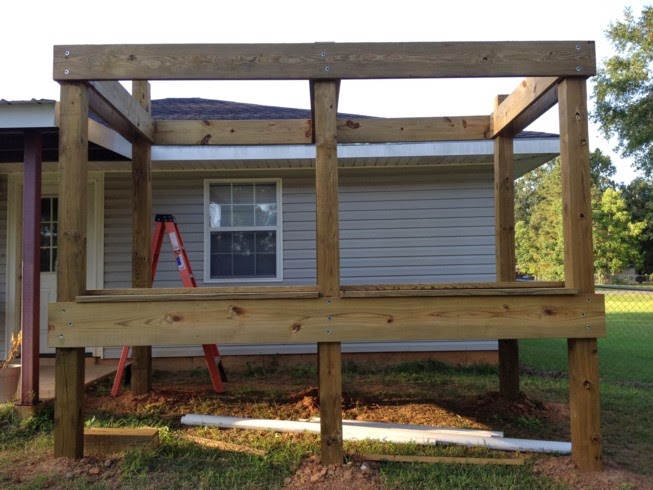
 A raised frame for the barrels.  


You can see the drilled holes for the PVC that will capture the water from the bottoms of the barrels.  Troy adds, "The main structure is 6x6 posts with 2x12 cross beams at the bottom and 2x10 cross beams at the tops.  There is no cement on the 6x6 posts, but they are at least 3 feet in the ground."

This is the rain capture system connected into the home's rain gutter.


Another angle.


All of the barrels and the water drains beneath. 


 A closer view of the pipes under the deck.


 A multipurpose hose spigot and larger drain.


 These two photos and diagram show the water gauge, built so the owner doesn't have to always open the barrels to find out how full they are.


Some answers from Troy:

How long does it take to fill all 10 buckets?   
A light rain can take 24 to 48 hours of rain to fill, a good heavy rain 12 to 24 hours.  That is with only about 12 to 14 feet of gutter.  I have plans to add 20 to 30 feet more of gutters to cut the time down even more..

What do you use the water for?
Gardening.  Where I live they charge for every $1 of water used, a $2 sewage charge - so a $100 water bill will be a $200 sewage bill with a total bill of $300.

How long could the water last if you start from full capacity?
I guess it depends on the size of the garden and what you want to use the water for.  I have a small garden, two 4x8 beds.  It went 2 to 2.5  weeks without raining this summer and i was just about out of water when it rained again.

Troy adds:  Remember one thing when building - water weighs a lot!   8.34 lbs a gallon.  My system is 550 gallons that makes a full system 4587lbs!!  


Thank you, Troy, for sharing your rain-collection system with us! 

10.17.2013

Elder Bednar's Remarks on Food Storage


Not much was said during the October sessions of The Church of Jesus Christ of Latter-day Saints' General Conference on Food Storage.  But Elder Bednar made a quick comment that I thought I would share:

" For decades the Church has taught its membership the principle of setting aside additional food, fuel, and money to take care of emergencies that might arise. The Church as an institution simply follows the same principles that are taught repeatedly to the members."

10.14.2013

Food Expiration Dates


This is a recent story that I've seen run by several news outlets on food expiration dates:
http://www.today.com/news/confusing-sell-dates-food-may-be-costing-you-money-8C11339499

The bottom line is that most dates stamped on packages are just a guess of when products will be at their highest quality.  Most can be used far beyond the recommended date stamped on the package.  There are three exceptions to this.  Meat, dairy and formula have expiration dates that should be observed (they will say "exp." on the label).  Otherwise, in some cases, the products will be good for years beyond the "best by" or "sell by" dates.

A quote: "Broad Leib (lead author of the study from Harvard Law School's Food Law and Policy Clinic) said food can be totally safe well past the date, from cereal to salad dressing, even eggs. She said "use by" or "sell by" dates on a product have "nothing to do with safety at all. It's just a manufacturer's best guess of when that food is going to be the freshest and at the best quality."

Another quote:  "According to countless food safety experts, the National Food Lab, there's not been a single instance of food-borne illness or food poisoning linked with people eating food after that date," Broad Leib said."

10.11.2013

Storing Water


This is a great blog post by Misty that is worth sharing.  She and her family did a trial-run and used only her stored water for 48 hours.  She learned some great things!  Also read the comments below her post.  There are some great ideas there.

Link: http://www.yourownhomestore.com/living-without-running-water/

9.25.2013

Finding Storage Items in your Current Menu


Ed and Myrna wanted to start working on their three-month supply.  They understood the basic concepts, but it just didn't seem like the food they ate could be stored easily.  They liked fresh green salads for dinner and fruit for breakfast.  They wanted to continue to eat this way, but were concerned that they couldn't store these foods. 

A challenge?  Yes!  But I haven't met a menu yet that didn't have options for easily-stored items once you broke it down.  A common misconception is that in order to rotate through storage items, you have to eat only the meals you have planned for in your storage.  This is definitely not the case!  You should eat normally and incorporate storage items into your diet as you would typically.  Your three-month supply plan does not become your new menu. 

Here are some examples from Ed and Myrna's situation:  Ed and Myrna are elderly with grandchildren that live locally.  For breakfast, they typically eat granola with fresh fruit and yogurt.  Once a week, their grandchildren come for breakfast and they share pancakes.  Ed and Myrna can store pancake mix, syrup, and granola in their breakfast plan.  They can store several gallons of milk in their freezer.  If the need arose for them to use their three-month supply, they would just continue eating granola and pancakes, both of which are part of their regular daily diet.  Ed regularly makes a great cobbler cake that calls for canned fruit so they store a little extra of that canned fruit to be used for breakfast fruit.  Even if Ed only makes that cake infrequently, they will be able to rotate through their supply of canned fruit before the cans reach their expiration dates.  They would prefer the fresh fruit, but if it isn't available, they'll have a rotatable option.  The pancake mix, granola, canned fruit, and syrup are all part of their regular diet and will be used and rotated before expiration dates.

For lunch, they like to have sandwiches.  They mostly use store-purchased bread and wraps.  Loaves of bread, tortillas and pita bread can easily be stored in their freezer.  Lettuce and tomatoes are not storage friendly and there really isn't a good alternative.  But both Ed & Myrna would be okay with cheese and meat.  Lunch meat and pre-sliced cheese can also be frozen and rotated.  Besides the frozen deli meat, they also keep canned chicken and tuna fish, which are types of sandwiches they sometimes have.  Myrna likes to bake, so they also store flour, sugar, salt, and yeast that can be make into bread or wraps.  They also store mayo, mustard, fruit juice, bags of chips and jars of pickles (all of which they already eat). 

As I mentioned earlier, they like to eat salads for dinner.  Storing salad greens is not an option.  A garden would provide some fresh greens, but they'll have to think beyond the salads.  Sometimes Ed & Myrna have soup and bread sticks with their salads.  Other nights they'll slice several breasts of chicken onto their salads.  On Sundays they usually have something different.  They'll eat a roast and potatoes, chicken burritos, or crock-pot chicken.  Their three-month supply dinner menu could include soups, chicken breasts, as well as their Sunday-evening rotations.  That would means storing chicken (frozen or canned), roasts (frozen or canned), soup supplies including beans and broth, spices, tortillas and salsa.  They can also store canned and frozen vegetables as well as salad garnishes like croutons.  In a situation where it is necessary to eat from their three-month supply, they might not be eating salads every night, but they will have food stored that they already regularly eat.  By incorporating these meals into their normal menu occasionally (like they were anyway), they'll be able to rotate through their food before hitting expiration dates.

Of course, one of the most important and easiest-to-store items is a cookie mix or ingredients to make cookies.  Ed stores these items as well as the supplies for his often-made cobbler cake. 

Ed & Myrna are actually fictional, but represent some of the typical issues that I've encountered.  Many of your personal menus are already very storage friendly.  Items like cereal, peanut butter & jelly, taco soup, burritos, pasta dishes (spaghetti, mac & cheese, alfredo), beans and rice, and chicken salad are items from my own menu rotations that are also extraordinarily easy to store.  If you think your menu can't be adapted, you might be surprised.  Ed & Myrna were.  :o)

9.11.2013

Peach Juice


I've been processing food from my garden over the past month.  We've had an abundance of yummy food.  I finally figured out that boiling green beans on the stove-top is always superior to cooking them in the microwave (as demonstrated by my husband).  We've also been enjoying a bumper crop of cucumbers which I've served almost every night for dinner.  They are particularly good when chilled.

I tried an experiment this year.  We've had so many peaches.  So I tried juicing some in my steam juicer.  I followed the same process that I use when I juice grapes (link here: http://iprepared.blogspot.com/2010/10/canning-grape-juice.html).   The picture above shows the result.  I was so surprised to see the jars fill up with this candy-red colored juice.  It is NOT what I expected.  

Peach juice is interesting.  It has a rich peach smell mixed with a little bit of stinky feet.  I haven't tasted any out of these bottles, but after pulling all the juice I could, I did stir the peaches at the end and was able to pull one last quart.  It was pink and full of debris instead of red and clear like these jars.  I drank some and just couldn't get past the stinky-feet smell/taste.  As I discussed it with my husband, we realized that you don't often find peach juice on its own.  Usually it's in a blend or is spiced like a cider.  So we tried it with a little cinnamon and it made all the difference.  I think we're going to have some yummy spiced peach cider this fall!

Have you ever juiced peaches?  Did you drink it straight or blend it with another juice?  Have you tried a peach cider?

8.30.2013

Home Canning

Here are some great sources to use as you do your home canning this fall:

Utah - Guide to Home Canning
Arizona - Home Canning (below 2000 ft.)
USDA - Complete Guide To Home Canning
National Center for Home Food Preservation  

And a great article on the benefits of home canning as well as a recap on updated best practices:
http://www.deseretnews.com/article/1,5143,700250097,00.html

4.16.2013

Great Utah ShakeOut

The Great Utah ShakeOut happens tomorrow at 10:15!

It would be great if we could all have warning that an earthquake is going to happen.  And for this practice, you do!  Sign up here if you haven't already.


From the site:
The ShakeOut Drill is scheduled for 10:15 AM on April 17, 2012. This means that wherever you are at that moment—at home, at work, at school, anywhere—you should Drop, Cover, and Hold On as if there were a major earthquake occurring at that very moment, and stay in this position for at least 60 seconds. There will not be any freeway closures, power outages, or other simulated effects of the hypothetical earthquake, unless your local government or utility company specifically notifies you about something of this nature. The ShakeOut is not something you need to leave work to participate in—in fact, participating at work is encouraged! Businesses, organizations, schools, and government agencies can register and have their employees practice Drop, Cover, and Hold On or have a more extensive emergency drill.

Go here for so many other resources including videos and instructions:
http://www.shakeout.org/utah/resources/

3.06.2013

BYU studies on food storage

Did you know that researchers at BYU are actively studying the storage lives of dry food products? Recently, they determined that we can store certain food products for much longer than originally presumed.2 This is great news for those of us working on our longer-term storage. It means much less stress about quick rotation.

Here is a list of the recommended storage life1,3 for many common home storage products (stored in ideal conditions):

Wheat, hard red - 30+
Wheat, hard white - 30+
White rice - 30+
Corn - 30+
Oats, quick - 30
Oats, regular - 30
Rolled oats - 30
Pasta - 30
Macaroni - 30
Spaghetti - 30
Flour, white - 10+
Pancake mix - very limited

Black beans - 30
Pinto beans - 30
White beans - 30
Refried beans, powdered - 5+

Non-fat powdered milk - 20
Cocoa Mix - 2+
Fruit drink mix - 2+
Sugar -30+

Potato flakes - 30
Potato pearls - very limited
Apple slices - 30
Dehydrated carrots - 20 to 25
Onions, dry - 30

Remember that the long storage life of these products depended upon correct packing techniques. In almost every case, BYU researchers were testing food that had been stored in #10 cans with oxygen absorbers. Best tasting products resulted from storage in a cool, dark, dry place in #10 cans with adequate seams.


If you would like to explore these studies yourself, here is a link to all of the BYU research studies:


Additional Sources:
2 - Home storage lasts 30 years or more. (LDS Church News - 1/19/2008)


Photo Source:
Copyrighted by blog author. Please do not repost without permission.

1.25.2013

Emergency Kits & Plans for Kids


This is a fabulous, well-worth-your-time read on Parents.com.  The post was written by Wendy Sue Swanson, a pediatrician mother who describes her emergency kits and plans for her kids.  She has a lot of great ideas.

I thought her idea of writing a letter to her son (to keep on file at his school in case of an emergency), was particularly smart.  She included it on page three of the article.

Here is the direct link:  http://www.parents.com/parenting/better-parenting/advice/emergency-preparedness/


More on kids & preparedness:
School Preparedness - http://iprepared.blogspot.com/2009/01/school-preparedness.html
Family Home Evening on Emergency Preparedness - http://iprepared.blogspot.com/2009/09/family-home-evening-earthquake-scenario.html

11.25.2012

Ensign Articles

Valerie from Prepared LDS Family posted a lovely compilation of all the articles from the past four years found in the Ensign on Self-Reliance and Preparedness.  Enjoy!

http://preparedldsfamily.blogspot.com/2012/11/ensign-articles-about-food-storage-and.html

11.05.2012

Lessons from Superstorm Sandy


There is a lot of  work to do after last week's superstorm, Sandy.  The devastation was huge and help is slow getting to a lot of people.  Because we lived on Long Island for several years, we're hearing first hand from close friends about the struggles that they are having.  Many still don't have power.  There isn't much gas available which is limiting travel and even the ability to help each other.  Almost all have trees down.  We can all learn so much about preparedness as we learn from others' experiences.   Here are a few lessons from Sandy that I've made note of:

1. Be prepared for more than 72 hours. 
We always hear about 72 hour kits and you might think that it's enough.  But clearly there are some people who haven't had any help and it's been longer than a week.1  There are still areas without electricity, food or water.  Some families are still in shelters, not knowing how quickly they'll be able to return home - if ever.  The reality is that in large scale disasters, help might be slow in coming.  Be prepared with much more than for just 72 hours. 

2. Store food and water.
As usual, the stores were cleaned out of food and water quickly.  When a storm is looming, you've already missed your best chance to store these items.  Now trucks can't get into many flooded and damaged areas to replenish supplies. It's a good idea to store food and water in abundance.  Aim for at least a three-month supply.  As I mentioned above, help might not come for weeks.

3. Ask yourself, what will I do without electricity.
How will you cook?  Stay warm?  Charge your cell phone?  Run your fridge?  Do you have a Cpap or any other necessary medical equipment that requires electricity (like a fridge for insulin)?  Address these issues ahead of time.  Have what you need on hand.

4. Don't wait to evacuate.
With Sandy, too many families thought they would be okay and didn't want to evacuate until it was too late.    Don't disregard warnings from authorities because you've weathered previous storms.  Be aware of all travel routes possible and the likelihood of becoming trapped.  I always worried about this when we lived on Long Island.  Because it's an island, there just weren't very many escape routes.  During Sandy many families were trapped on islands or peninsulas because those few routes were flooded, blocked or closed.  Always listen carefully and err on the side of caution.  It's also a good idea to keep money on hand so that you'll be able to make purchases if you are required to evacuate.

5. Have flood insurance.
Most flooding happened in what is called Zone A flood areas.  Flooding is highly likely in these areas and you should always have flood insurance.

6. Be prepared even if you aren't in harm's way.
Most of our friends on Long Island weren't ever in danger of their own homes flooding.  Still they are highly affected by the flooding roads, falling trees and damage that did happen around them.  Similarly, even if you aren't flooded or primarily compromised in a disaster, you might still experience the repercussions like loss of power, blocked roads, no gas, or low stocked stores, etc.  Sometimes the problems affect people thousands of miles away.  Everyone should be prepared regardless of location and situation.


Sources:
1 - http://www.cnn.com/2012/11/03/us/tropical-weather-sandy/index.html?hpt=hp_t1

11.03.2012

Would the Romneys Keep a White House Food Storage?


This is not intended to be a political post.  Nor is it intended to be a recommendation that you vote any certain way.  I highly respect every individual's right to vote his/her conscience.  But the possibility of Romney, (who is a member of The Church of Jesus Christ of Latter-day Saints, which is also the organization from which most of my recommendations come), moving into the White House does make me wonder how he might handle food storage.  I loved this little snippet from CNN which ponders the same question.

Jessica Ravitz writes, "The LDS Church advises its members to store enough food to feed a family for a year.  Food storage is viewed as a practical measure, one that can come in handy during, say, a crippling superstorm, massive power outages or unforeseen financial hardships.

The practice is rooted in Mormon history. The church’s early pioneers, on their trek westward to what is now Utah, experienced great suffering and starvation. They also endured their share of persecution and couldn’t rely on the help of others. So having resources squirreled away became a collective comfort.

Any chance that the Romneys would institute White House food storage?  Not because they would need it for themselves or likely anyone else at the White House, but Riess said in these uncertain times, it could be a good lesson in preparedness to showcase to the nation.  “I wouldn’t be surprised to see that,” she said.

Even if a family storing it doesn’t need the food, by having it available that family is poised to help others. Serving those less fortunate or in crisis is big in the LDS Church, and it is a part of another practice that may find its way into the White House if the Romneys move in."

I agree with the author that having a food supply would set a good example in preparedness for the nation.  I also like that she highlighted that one of the main purposes for having a food supply is so we can help others.  So, we'll have to watch and see.  What do you think?  It might not even be a relevant question after Tuesday.  [Don't forget to vote!]


Source:  http://religion.blogs.cnn.com/2012/11/02/if-mormons-move-into-the-white-house/?hpt=hp_c2

10.28.2012

Storm Preparation

Forgive me for such a long absence.  I have teenagers and life has gotten busy. 

Photo Source: NOAA

In wake of the "superstorm" approaching the eastern United States, I though I would repost some relevant past preparedness information.

Hurricane Preparedness
5 areas to address as you prepare for an approaching hurricane.
http://www.iprepared.blogspot.com/2011/08/hurricane-preparedness.html

Winter Preparedness for your Car
If there is any chance that you'll have to evacuate or travel during the storm, make sure your vehicles are already packed with supplies. 
http://www.iprepared.blogspot.com/2009/01/winter-preparedness-for-your-car.html

Winter Warmth
When the temperatures plummet and the power is out, here are 11 hints for staying warm.
http://www.iprepared.blogspot.com/2009/01/winter-warmth.html

Also see:  CNN's Hurricane Preparation Checklist - What to do before a big storm.

It looks like sustained flooding, flash floods, and winter weather (for the north) are the biggest issues.  Above all, make sure you weather (pun intended!) out this storm in a safe place.  Don't wait until Monday night to stock up.  Check in on your elderly neighbors.  Stay off the roads and stay safe!

6.27.2012

An Example of a Fire Evacuation List


This video tells the story of Jaime Astorga and his family in Colorado who were threatened by a fast moving wild fire. Their family had discussed the need for fire evacuation plans and developed a custom list of items to collect dependent upon the amount of time they had prior to evacuating. They divided their list into 15 minute segments.

 It sounds like they were able to gather quite a bit before having to leave. And the best news? Their home was one of a few saved and they will be able to return!

A list like this is a great idea for many situations.  Want some ideas for making your own list?  Here is a prior post with some ideas:  http://iprepared.blogspot.com/2010/08/prioritized-evacuation-list-grab-n-go.html

6.06.2012

Collecting Rain Water

As I have planted my garden this year, I've already had a failure.  My onions, lettuce, and carrots haven't come up and I've planted them twice!  I suspect it's a watering issue.  We've moved to secondary water which isn't turned on until mid April.  That means I've had to hand water for the first few months this year and I suspect that I didn't water those baby seeds enough.

This has me thinking about water for my garden in an emergency.  We live in a desert and don't get a lot of rain through the summer.  In order to be productive, my trees, berries and seeds would definitely need water even if it wasn't available.  I probably wouldn't want to use my clean drinking water supplies.  They would be depleted too rapidly. 

Collecting rain water would be a great way to ensure that you have some water for your garden.  I've seen some great ideas and different set-ups as I've browsed the web.  I've compiled a few here to give you some ideas. 

Basic Components:
1) A large container such as a trash can or water barrel to collect the rain.
2) A lid or top.  You need to be able to keep kids out.  A lid (or at least a screen) will also keep mosquitoes from multiplying.
3) An overflow function.  You don't want the water backing up into your downspout, pouring into your window wells or gathering around your foundation.  You might think this isn't necessary, but Sunset Magazine states that one inch of rain water on a 1000 square foot roof will yield 600 gallons.  In a good rain storm, you might be needing that overflow after only a few minutes.  A good overflow system will handle a large volume of water and move it far from your foundation.
4) Water accessibility method.  This can be a fancy hose set-up at the base or it can be just as simple as a lid that you lift to scoop out the water.

You probably don't want to locate your barrel in the front of your home where it might be an eye-sore.  A location in your back or side yard that is also close to your garden would be ideal.  Two or more barrels can be connected for additional water storage.

Here are some pictures and ideas:


This is a pretty simple setup from Workbench Magazine.  The hose on the side is for overflow.  You could make it longer if needed.  Instructions can be found here:  https://docs.google.com/file/d/0B2gdNar_rMtAMjQxNzUxYmItYjU1ZC00YzYzLTgwNjMtZjg1ODA2MjYxMzdk/edit?pli=1


(click to enlarge)

This is a fairly elaborate setup from Family Handy Man.  I love the use of two barrels and the wooden base.  I also really like the overflow mechanism used.  Instructions Link: http://www.familyhandyman.com/DIY-Projects/Green-Home/Saving-Water/how-to-build-a-rain-barrel


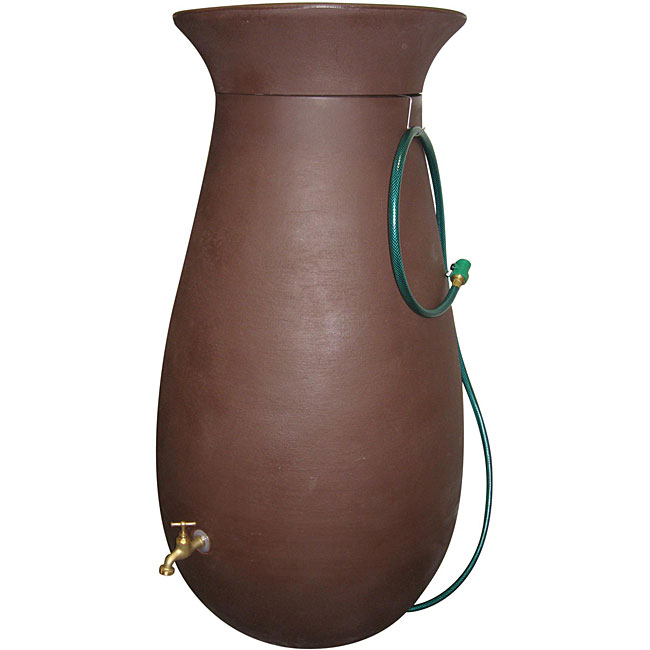
You can buy a ready-to-go commercially prepared rain barrel.  Just search for "rain barrel" and you will see many options.  Some are even beautiful like this 65 gallon barrel above which is about $150 on Overstock.  Amazon is also a good source.  They have kits and other supplies as well.


Here are some basic instructions from HGTV.   Actual barrel building starts at 1:30 in the segment.


This is also a fantastic how-to video from Kansas State.


I'd love to hear how you've made this work at your home!

Update:  Here is how Troy made his own 10 barrel rain collection system: http://iprepared.blogspot.com/2013/11/a-working-rain-collection-system.html

4.17.2012

EaRThQuAKe!

After one minute of intense 7.0 shaking, extensive damage is done.  As you look around at the cracked windows, broken furniture, and utter mess, you are grateful to be alive.  But now the real test begins.  The power will likely be out for weeks.  Water lines are compromised and you won't have water up to a month.  Major shipping corridors and roads are blocked by falling overpasses.  No food, no electricity, no phone service and no water.  Where is your family?  Do you have what you need? 

If not, get prepared!

4.10.2012

Activities for the Great Utah ShakeOut


The Great Utah ShakeOut happens exactly one week from today!  Have you made any plans yet?  Here are some ways that you can help your classroom, business place, or family participate:

Just Do It!
Make plans to signal an earthquake drill at 10:15 a.m on April 17. 

Give Some Advanced Warning
Wouldn't it be nice if we could all have warning when a real earthquake happens!  You can forewarn your colleagues and/or children about an upcoming STOP! COVER! and HOLD ON! drill or you can just create and act out a simulation.  Drills like this can scare young children.  So carefully assess your participants and decide if they need to know beforehand.  You can download and print posters advertising the ShakeOut here: http://www.shakeout.org/utah/resources/index.html

Review Earthquake Procedures
Do a little training at home or with colleagues to educate them about STOP! COVER! and HOLD ON!  Evaluate your living/work spaces and make improvements as needed.  More information, including some games and quizzes, and can be found here: http://www.dropcoverholdon.org/ and here: http://www.shakeout.org/utah/

With Children, "you can ... play the ‘Earthquake Game’ where when anyone says “earthquake!” everyone has to pretend an earthquake is happening and practice their response. Teach your children that they should go under a table and hold on if one is near. If they are in a room without a table, crouch against an interior wall, away from windows. Find an “earthquake-safe” location in every room of the house so they don’t try to run during an earthquake. (http://www.shakeout.org/utah/faq/index.html)

Use Sound Effects
The Great Utah ShakeOut website has an audio earthquake file that you can download and use.  There will also be local radios participating in the drill and playing an audio file with sound effects.  You can find the audio files and participating radio stations at:  http://www.shakeout.org/utah/drill/broadcast/.  We did something similar for a Relief Society preparedness night several years ago.  Just having the audio was powerful and frightening.  Be aware that children might be especially frightened and adjust accordingly.

Debrief
Don't let it be business-as-usual afterwards.  The real trials of an earthquake usually come after the shaking has stopped.  Discuss with your family and/or peers your current readiness and set specific goals to improve.